What is going on inside the wall
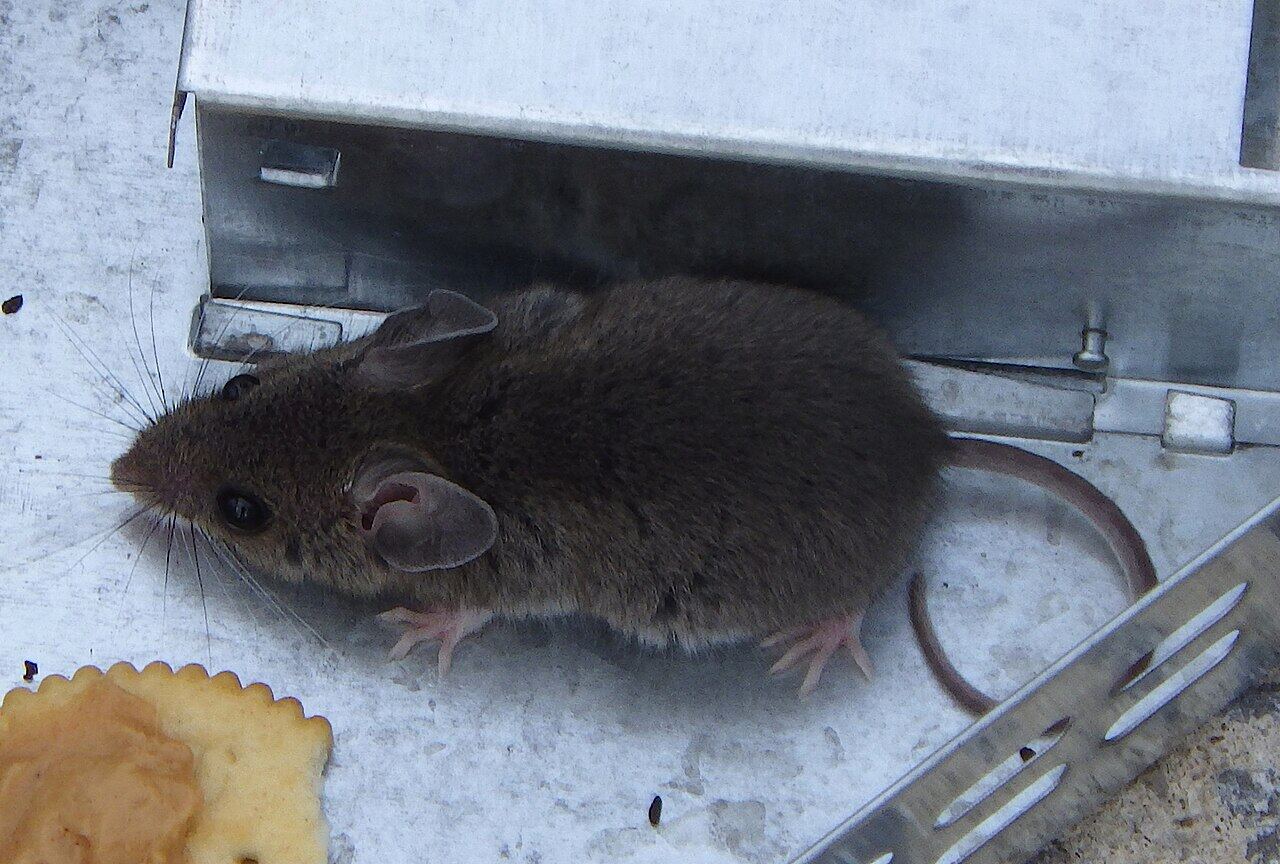
Light scratching or skittering inside a wall, often in the evening or early morning, is usually house mice. They travel inside wall cavities between the crawl space or basement and the attic, following pipes, wires and ducts. They nest where it is warm, like behind a refrigerator, near a water heater or around a chimney chase.
Heavier thumps or gnawing can mean rats, and noise in an outside wall near the roofline at night can be a flying squirrel. A technician sorts that out by finding droppings and entry points, not by guessing from sound alone. See rodent noises at night for what each sound usually means.
Older plaster walls in Asheville bungalows and Craftsman homes often have open stud bays that run from the crawl space to the attic with nothing to stop a mouse. That is why mice in one wall can be heard in a bedroom upstairs a few minutes later.
What a thorough job includes
- Tracing the path: where mice get into the wall from below or above, where they come out, and where they nest.
- Traps set at the points where mice leave the wall, like under sinks, behind appliances, in the basement or crawl space and in the attic.
- Sealing the entry points on the outside of the house, plus the pipe and wire holes through the subfloor and top plates.
- Avoiding poison inside walls, so a mouse does not die where you cannot reach it.
- Small access holes only when needed, placed where they are easy to patch, like inside a closet or behind an appliance.
- A plan for any dead mouse smell, if one shows up. See dead rodent removal.
Hearing scratching in the walls?
Your call goes to an independent rodent control provider serving Asheville and Buncombe County. Describe what you are seeing and ask for the plan and the price in writing before any work starts.
(828) 503-0038Tap to call · Free to callStep by step
1. You note where and when you hear the noise. Times and rooms help a lot.
2. The technician inspects the crawl space or basement under that wall and the attic above it.
3. Traps go where the mice come out of the wall, and in the spaces above and below.
4. Outside entry points are sealed, then the holes that connect the wall to the crawl space and attic.
5. Return visits check traps until the noise and catches stop.
Why Asheville walls are a mouse highway
Balloon framing shows up in many older houses. In that style, common in American homes built before the 1940s, wall studs run from the foundation sill to the roof framing in one piece, with no fire blocking between floors. Mice can climb from the crawl space to the attic inside one wall.
Old chimneys and flues add more paths. Many bungalows have a brick chimney with gaps where it passes through the floors and roof framing.
Additions and renovations leave openings. A kitchen redone in the 1990s with new plumbing lines, or an old porch turned into a bedroom, often left gaps where new work met old.
The cold does the rest. When fall nights turn cold, mice move into walls near heat sources and stay through the winter. See seasonal rodent problems in Asheville.
What to ask before you book
Ask how the technician will find where the mice enter and leave the wall, and whether that includes the crawl space and attic. Ask whether any wall openings are expected and, if so, where and how big. Ask whether the plan uses traps only inside the house, and what happens if a mouse dies in the wall. Ask how many return visits are included and what the price covers.
Write down when and where you hear the noise for a few nights before the visit. A technician who knows the noise is in the kitchen wall at 10 p.m. and the bedroom ceiling at 5 a.m. can trace the path much faster.
Mice in walls questions
Will the mice in my walls leave on their own?
Rarely. They have shelter and are close to food. Without trapping where they exit and sealing where they enter, the noise usually continues through winter.
Do you have to cut open the wall?
Usually not. Most jobs trap mice where they leave the wall and seal the paths into it. A small access hole is sometimes needed to reach a nest or a dead mouse.
Why do I only hear them at night?
Mice are most active from dusk through the early morning, and houses are quiet then, so the sound carries.
Can I put poison in the wall?
It is a poor idea. A mouse that eats bait can die inside the wall and cause a smell for weeks. Trapping is the better plan inside a home.
How long until the noise stops?
Often within one to three weeks once traps are set where mice exit and the entry points are sealed.
Could the noise in my walls be something else?
Yes. Flying squirrels near the roofline, pipes ticking as they heat and cool and insects can all make noise. Droppings and entry holes confirm mice.
Ready to have someone look at it?
A local rodent technician can often schedule a visit within a day or two, and same-day appointments are often available. Ask for the plan and the price in writing.
(828) 503-0038Tap to call · Free to call